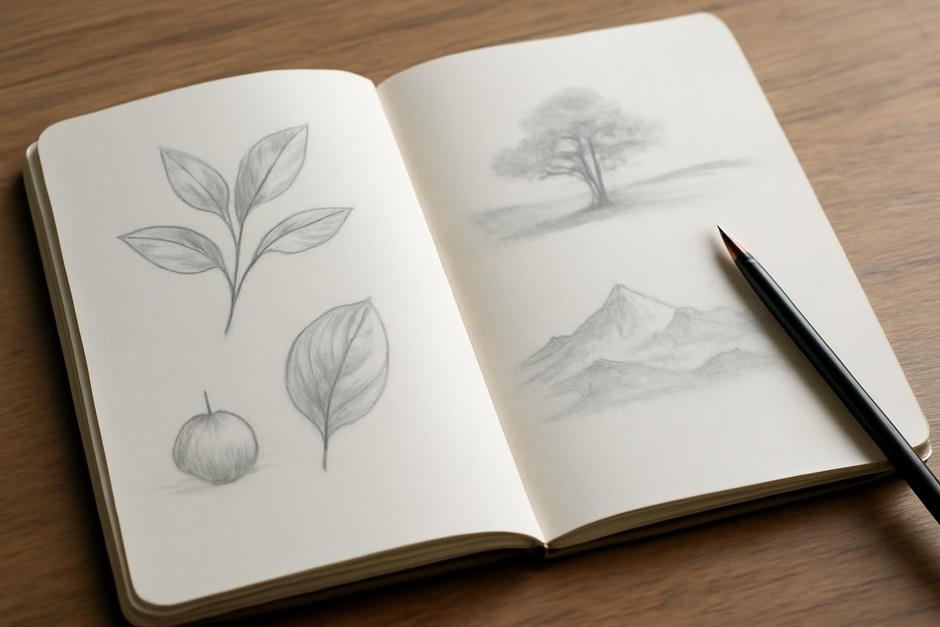
Composition Essentials: Balance, Rhythm, and Focus
Balance is not symmetry
Balance in composition is about visual weight, not perfect symmetry. A small dark shape can be balanced by a larger light shape if the eye reads their combined weight as equal. Consider contrast, size, and placement when distributing visual weight across a page.
Establishing a focal point
A clear focal point gives the viewer a place to begin. Use contrast, detail, or a strong edge to create this point of interest. Once established, other elements should support or lead toward it rather than compete for attention.
Creating rhythm
Rhythm comes from repeated elements and intervals. It may be a sequence of shapes, a pattern of light and dark, or alternating brush strokes. Rhythm adds movement and unity without forcing the eye. Vary repetition to avoid monotony: change scale, value, or orientation to keep the pattern engaging.
- Rule of thirds: a useful starting grid to place important elements off-center.
- Leading lines: subtle lines can guide attention across the page.
- Negative space: consider the shapes you leave empty; they participate in balance and rhythm.
Simplify to clarify
Composition often benefits from subtraction. Remove or tone down elements that distract from the main idea. Simplifying shapes and values clarifies relationships and strengthens the central message of the image.
Scale and proportion
Scale relationships create hierarchy. A larger element reads as more important, while smaller elements support or provide context. Be intentional: exaggerating proportion can emphasize a mood or idea, while more restrained proportions suggest calm and equilibrium.
Iterative layout
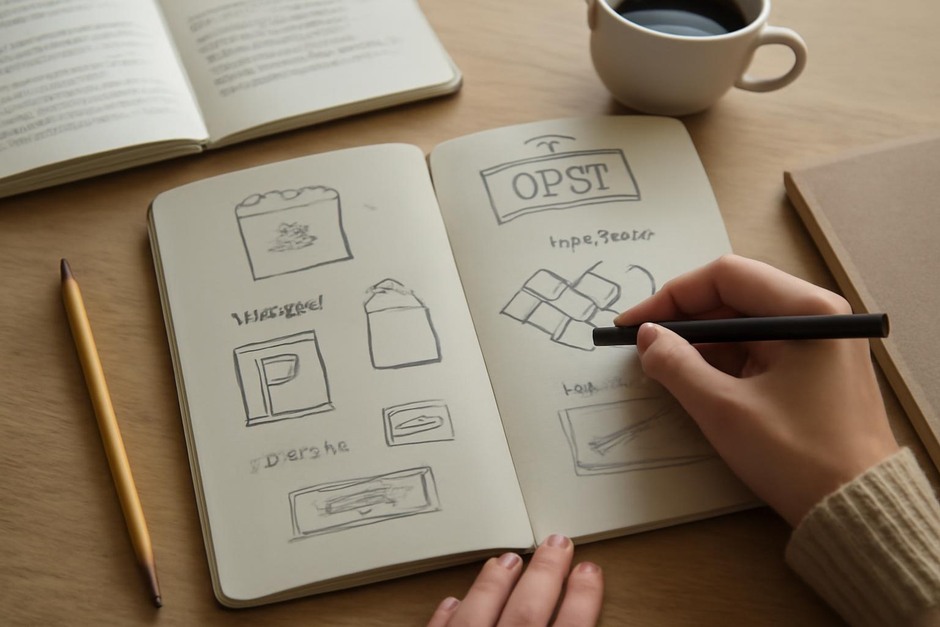
Sketching multiple thumbnails is an efficient way to test compositional ideas. Thumbnails let you explore different balances and focal arrangements quickly. Choose a promising layout and refine it gradually, attending to how the eye moves across the image.
Final considerations
Good composition is a balance of intention and discovery. Start with clear priorities, use simple tools to arrange elements, and allow adjustments as the work develops. Small decisions about balance, rhythm, and focus accumulate into a composition that feels coherent and quietly persuasive.